
Snapping turtles are known for their powerful jaws and prehistoric appearance. They are large freshwater turtles found in the Americas, often called the “dinosaur of the turtle world” due to their rugged, spiked shells and long tails.
These formidable reptiles can deliver bites strong enough to amputate a finger, yet many people find them fascinating to observe and even keep as pets. In this comprehensive guide, we’ll explore general snapping turtle facts and dive into details about all five species, including their traits, diets, habitats, threats, and how they are being conserved.
Whether you’re curious about the gigantic alligator snapping turtle or the common snapper in your local pond, read on for an in-depth look at what makes each species unique. We’ve also answered frequently asked questions about keeping snapping turtles as pets and their conservation status. Let’s get snapping!
Table of Contents
- Snapping Turtle Overview
- Types of Snapping Turtles
- General Information and Facts
- Alligator Snapping Turtle
- Common Snapping Turtle
- Suwannee Snapping Turtle
- Central American Snapping Turtle
- South American Snapping Turtle
- Frequently Asked Questions
Snapping Turtle Overview
All snapping turtles belong to the family Chelydridae, a group of large freshwater turtles native to the Americas. This family includes two genera: Chelydra (the common snapping turtles and their kin) and Macrochelys (the alligator snapping turtles).
Snapping turtles have a distinctive look with rough, bumpy shells (carapaces) that often grow algae, giving them a camouflage in murky waters. They also have relatively small bottom shells (plastrons), which means they cannot retract fully for protection. Instead, these turtles rely on their size, powerful jaws, and aggressive defense when threatened.
These reptiles have long muscular tails (sometimes nearly as long as the shell) and necks adorned with tubercles (knob-like bumps). Their strong beak-like jaws can easily crush prey and have been known to break small bones.
In water, snapping turtles are stealthy and will often lie buried in mud with only their eyes and nostrils exposed, ambushing fish, amphibians, and other prey. On land, however, they can become more defensive and may lunge and snap if approached.
Snapping turtles are omnivorous. They actively hunt or scavenge for fish, frogs, snakes, smaller turtles, crayfish, and occasionally water birds and small mammals. They also eat a variety of aquatic plants, algae, fruits, and carrion. As opportunistic feeders, if something can fit in their mouth, it’s fair game. Their role as scavengers helps keep waterways clean by consuming dead organisms. Despite their fierce reputation, in the wild these turtles prefer to avoid humans and spend most of their time submerged and hidden.
All snapping turtle species are long-lived, with lifespans often exceeding 40-50 years in the wild. In captivity, some individuals have lived over 100 years under ideal care. They reach maturity slowly; for example, common snapping turtle females may not breed until 10-15 years old. Breeding season for most snapping turtles occurs in the warmer months.
Females emerge from the water to lay eggs on land, digging nests in sandy or muddy soil. A single clutch can contain anywhere from 20 to 40 round, leathery eggs. Incubation lasts about 3-4 months, and the temperature of the nest can determine the hatchlings’ sex (a warmer nest tends to produce females, cooler produces males).
As apex predators in their habitats, adult snapping turtles have few natural enemies. Young hatchlings and eggs, however, fall prey to raccoons, birds, large fish, and other predators. The biggest threat to snapping turtles of all species is humans due to habitat destruction, pollution, and hunting.
In some regions, snapping turtles are harvested for their meat (as in turtle soup) or collected for the pet trade, which has led to population declines. Conservation efforts and legal protections are increasingly important to ensure these ancient reptiles remain part of our freshwater ecosystems.
Fun Fact: Snapping turtles have an ancient lineage. Fossils show that extinct snapping turtle relatives lived millions of years ago. Today’s snapping turtles look remarkably similar to those prehistoric ancestors, reinforcing their image as “living dinosaurs.”
Types of Snapping Turtles
Contrary to popular belief, there isn’t just one or two kinds of snapping turtle, there are five living species. All five belong to the Chelydridae family and share the traits of strong jaws and a primitive, armored appearance. Below is a list of all snapping turtle species known today:
- Alligator snapping turtle (Macrochelys temminckii) – The largest snapping turtle, native to the southeastern United States.
- Common snapping turtle (Chelydra serpentina) – Widespread across North America; often simply called the “snapping turtle.”
- Suwannee snapping turtle (Macrochelys suwanniensis) – A recently recognized species found only in the Suwannee River of Florida and Georgia.
- Central American snapping turtle (Chelydra rossignonii) – Also known as the Mexican or Yucatán snapping turtle, found in parts of Mexico and Central America.
- South American snapping turtle (Chelydra acutirostris) – Native to Central America and the northwestern corner of South America (the only snapping turtle to reach South America).
All five species have a similar “built for battle” look, with ridged shells and long, muscular limbs. They are all predators or omnivores and can inflict painful bites when provoked. However, each species has its own range, size, and specific adaptations, which we will explore in the sections below.
Historically, there were also several extinct snapping turtle species (from fossils), but our focus here is on the living types. Next, we provide general facts about snapping turtles as a group, and then we’ll dive into individual profiles for each species.
General Information and Facts About Snapping Turtles
Before discussing each species, let’s look at some general snapping turtle facts and characteristics that apply to most or all members of this family:
Family & Classification: Snapping turtles are in the family Chelydridae, order Testudines (turtles). They are reptiles (class Reptilia) and share a common ancestor distinct from other turtle families.
Physical Appearance: They have a rugged, heavily-armored look. The carapace (upper shell) often has three pronounced ridges running lengthwise, especially in younger alligator snappers. Their plastron (lower shell) is unusually small, leaving much of their flesh exposed. All have large heads with hooked beaks and strong, dinosaur-like tails.
Size: Snapping turtles are among the largest freshwater turtles. Depending on species, adults typically range from about 25-50 cm (10-20 inches) in shell length. The alligator snapping turtle is the heavyweight champion, often weighing 50-80 kg (110-175 lbs) or more, while common snappers usually weigh 5-16 kg (11-35 lbs). Males grow larger than females.
Longevity: These turtles can live a very long time. In the wild, a common snapper may live 30+ years, and alligator snappers 45+ years. In captivity, with good care, they have lived well past 70 years. It’s possible some individuals reach a century old.
Behavior: Snapping turtles are mostly aquatic and spend most of their time underwater. They are generally solitary and do not form social groups. In water, they tend to be calm or shy around people. On land (for example, when a female is looking for a nesting site), they become much more defensive since they feel vulnerable.
Diet: All snapping turtles are omnivores but heavily favor meat in their diets. They will eat fish, frogs, tadpoles, salamanders, crayfish, snails, insects, snakes, small birds, and even other turtles. They also consume aquatic vegetation, fallen fruits or nuts, and carrion. This broad diet helps them survive in various environments.
Hunting Strategy: Many snapping turtles are ambush predators. An alligator snapping turtle, for instance, will sit motionless underwater with its mouth open, wriggling a worm-like appendage on its tongue to lure fish in. Common snappers often hide in mud or under logs, lunging quickly to capture prey that comes close.
Reproduction: Snapping turtles usually mate in spring. A female typically lays one clutch of eggs per year, often in late spring or early summer. Clutch sizes range roughly from 20 to 40 eggs (the common snapper can lay even more, up to ~80 in northern ranges). The eggs incubate for about 90-120 days. Hatchlings are independent from birth and receive no parental care.
Temperature-Dependent Sex: Like many turtles, the sex of snapping turtle hatchlings is influenced by incubation temperature. Cooler nest temperatures tend to produce more males, while warmer temperatures produce more females. For example, alligator snapping turtle eggs around 25-27°C (77-81°F) yield mostly males, whereas 29-30°C (84-86°F) yield mostly females.
Defenses and Dangers: Adult snapping turtles rely on intimidation rather than hiding. If cornered on land, they will hiss, snap, and use their strong bite as defense. Despite myths, they cannot “snap” their own shells in half, but their bite is very powerful. Caution: they can strike surprisingly far by extending their long necks.
Human Interactions: Snapping turtles generally want to be left alone. They do not attack humans unprovoked in the wild. Most injuries occur when people try to handle or move them carelessly. All turtles carry Salmonella bacteria on their skin and shells, so it’s important to wash your hands after any contact. (This is true for all pet turtles, not just snappers. See our guide on Turtles and Salmonella.)
Hibernation: In colder climates, snapping turtles may brumate (hibernate) underwater during winter. They bury themselves in mud and slow their metabolism, sometimes staying under from late fall to spring. They can absorb some oxygen through their skin and throat lining (and cloaca) while submerged, allowing them to stay underwater for months.
Exotic Pets and Invasiveness: Because of their hardy nature, some snapping turtles have been introduced outside their native range (often released pets). Common snapping turtles have become invasive in parts of Europe and Asia where they can disrupt local ecosystems. Many jurisdictions have laws against keeping or releasing snapping turtles (see turtle laws for examples).
Now that we’ve covered the basics, let’s explore each snapping turtle species in detail. We’ll discuss their identifying features, natural range, habits, as well as the current threats they face and conservation measures in place.
Alligator Snapping Turtle (Macrochelys temminckii)
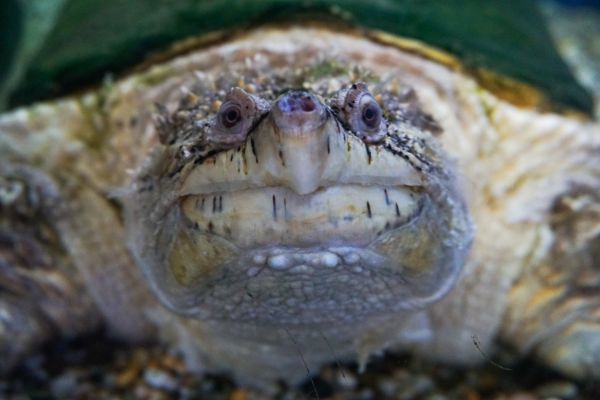

The alligator snapping turtle is the largest snapping turtle species and one of the world’s heaviest freshwater turtles. It earned its name because its spiked shell and ridged tail resemble an alligator’s rough hide. An average adult alligator snapper weighs 50-80 kg (110-175 lb), with some giants exceeding 90 kg (200 lb). Shell length typically ranges from 40-80 cm (16-32 inches).
Males are larger than females and also have longer, thicker tails. This turtle’s head is enormous with strong, hooked jaws that can easily crush bones. Uniquely, it has a pink, worm-like organ on its tongue used to lure prey, though this is an adaptation not seen in the common snapping turtle.
Macrochelys temminckii is endemic to the southeastern United States. Its range spans river systems that drain into the Gulf of Mexico, including the Mississippi River basin. Alligator snapping turtles inhabit deep rivers, swamps, bayous, and oxbow lakes with slow-moving water.
They are almost entirely aquatic and rarely venture onto land except when females lay eggs. In the water, they are often sedentary, lying on the bottom camouflaged among logs and debris. With their mouths open and tongues wriggling, they patiently wait for fish to be drawn in by the “fishing lure” This is a strategy called sit-and-wait ambush hunting.
Alligator snappers have a very prehistoric appearance. Their dark brown or olive shell is heavily serrated with three prominent ridges of conical spikes running along the back. These spikes tend to be most pronounced in juveniles and gradually wear down with age. They have eyes on the sides of the head (unlike the common snapper’s more forward-facing eyes), which helps them see peripherally while remaining still. Algae often grows on their shells, further aiding in camouflage. Despite their intimidating looks, alligator snapping turtles are not aggressive underwater; they usually remain still or slowly walk away from divers or swimmers.
The diet of an alligator snapping turtle is broad. Fish are a staple, but they also eat amphibians, snakes, aquatic birds, crustaceans, mollusks, and carrion. Remarkably, they are known to prey on other turtles as well. In one Louisiana study, turtles (like smaller musk turtles and mud turtles) were found in the stomachs of a high percentage of sampled alligator snappers. This species can use chemical cues in the water to detect prey, one way is by sensing the musk secretions of other turtles. They have even been observed catching small mammals like nutria or squirrels that wander into the water.
Reproduction for M. temminckii involves mating in spring (often April to June). About two months after mating, the female crawls onto land to find a suitable nesting spot, often traveling significant distances from water.
She digs a hole and lays roughly 20-50 eggs (clutch size can vary with the female’s size and latitude). The eggs incubate for approximately 100-120 days. As mentioned earlier, temperature during incubation determines the sex of the hatchlings. The tiny hatchlings, when they emerge, look like miniatures of the adults with spiky shells and are immediately independent, instinctively heading for water.

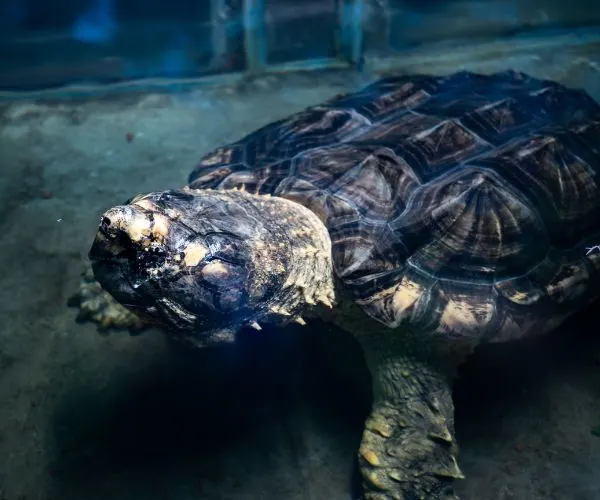
Conservation Status: The alligator snapping turtle is currently classified as a Vulnerable species on the IUCN Red List. This means it is at risk of extinction in the wild if threats continue. Historically, the species suffered heavy declines due to overharvesting for turtle meat (it was a popular ingredient in turtle soup through the mid-20th century).
Their slow growth and late maturity make it hard for populations to rebound quickly. Habitat destruction and water pollution have also contributed to declines. Today, alligator snappers are protected by various state laws. For instance, states like Florida, Georgia, Texas, and others prohibit or regulate their capture. International trade is monitored as well. The M. temminckii was moved to CITES Appendix II in 2023, tightening export/import controls.
Recovery Efforts: Conservation groups and wildlife agencies have been working to conserve alligator snapping turtles. Some states have head-start programs where eggs are hatched and juveniles raised in captivity for release, improving their survival odds. The U.S. Fish and Wildlife Service has also considered federal listing.
In fact, as of 2021, the Service proposed listing the alligator snapping turtle as a threatened species under the Endangered Species Act, recognizing that it faces a high risk of decline. While that federal listing is still pending finalization, many biologists agree on the need for continued protections. Helping these turtles means protecting their wetland habitats and preventing illegal poaching.
Threats: Habitat loss (river damming, wetland drainage), historical overharvest for food, ongoing illegal poaching, and getting caught (bycatch) in fishing gear are major threats. Eggs and hatchlings can be eaten by raccoons, large fish, herons, and other predators. Adult alligator snappers have virtually no natural predators besides humans.
Conservation: IUCN Status: Vulnerable. Protected by law in many states (e.g. it’s illegal to capture them in states like Florida, Georgia, Louisiana, etc. without a permit). Listed under CITES Appendix II (international trade controlled). Conservation programs are monitoring populations and head-starting juveniles. In captivity, this species can breed, and some zoos and hatcheries are raising young turtles for reintroduction.
With their primeval looks and impressive size, alligator snapping turtles are truly iconic. They remind us of a time when reptiles dominated aquatic ecosystems. Continued conservation efforts aim to ensure that these “living fossils” persist in our rivers for generations to come.
Common Snapping Turtle (Chelydra serpentina)

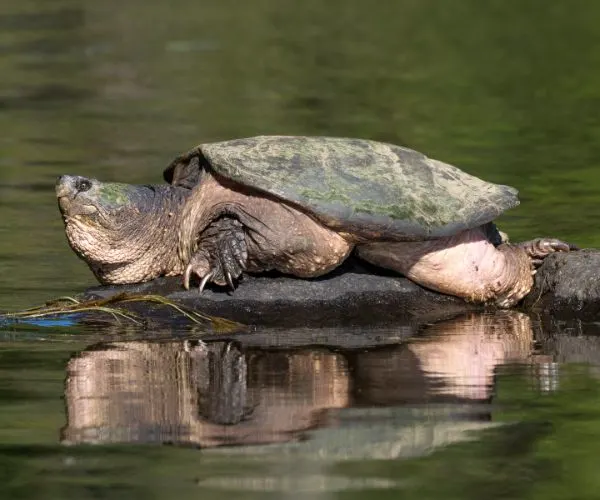
The common snapping turtle is the most widespread and well-known of the snapping turtles. It ranges across a huge area of North America, from southern Canada through the contiguous United States (east of the Rocky Mountains) and down into parts of Mexico and Central America. True to its name, this species is “common” in many regions and is often simply referred to as the snapping turtle. An adult Chelydra serpentina has a shell length typically between 20-36 cm (8-14 inches), though large old males can reach up to 49 cm (19 in). They usually weigh around 5-16 kg (11-35 lb), with exceptional individuals pushing 30+ kg (over 65 lb). While smaller than the alligator snapper, a big common snapper is still a formidable turtle.
Common snapping turtles have a brown, olive, or black carapace that is often covered in mud or algae. The shell is less sharply ridged than that of an alligator snapper, but juvenile common snappers do show three subtle keels along the back. The limbs, neck, and tail have a rough, tubercled skin. Their tail has saw-toothed edges along the top. Unlike alligator snappers, common snappers have eyes on the front/side of the head and lack the worm-like tongue lure. They rely more on active hunting and scavenging than luring prey. Common snappers also have a surprisingly long neck and can reach their head quite far back over their shell to bite (one reason you should never pick them up by the sides of the shell!).
C. serpentina is highly adaptable to different water habitats. You can find these turtles in ponds, marshes, swamps, lakes, slow rivers, and even brackish estuaries. They prefer bodies of water with soft muddy or silty bottoms and plenty of aquatic vegetation or cover. During the day, a common snapper often lies on the bottom, partially buried in mud with only its head exposed. They can and do swim actively, but they are not as agile in open water as some other turtles, so they favor concealment and ambush. Although not frequently seen basking, common snappers will sometimes float at the surface to sun themselves, and in cooler parts of their range they may climb out onto logs or banks to bask on warm days.
The diet of a common snapping turtle is truly omnivorous. They will eat almost anything edible they can catch or find. This includes aquatic insects, crayfish, fish, tadpoles and frogs, snakes, small turtles, lizards, birds (they may grab an unsuspecting duckling from below), and small mammals that come to the water’s edge. They also scavenge readily on dead fish or animals. In terms of plant matter, common snappers consume algae, lily pads, duckweed, and various aquatic plants, as well as fallen fruits or acorns that end up in the water. Studies have shown plant material can make up a significant portion of their diet, especially in summer. Their opportunistic feeding helps control populations of some prey species and also aids in nutrient cycling in their habitats.


During breeding season (spring to early summer), common snapping turtles mate in the water. Females then embark on sometimes lengthy overland journeys to find suitable nesting sites. They will look for sandy or soft soil in sunny areas, sometimes a considerable distance (over a kilometer) from water. Each female usually lays one clutch per year, averaging 20-40 eggs (but larger, older females in northern areas can lay 50 or more).
The white, ping-pong-ball-sized eggs hatch after about 75-90 days, depending on temperature. Baby snapping turtles, around 3 cm (1.2 in) long at hatching, emerge in late summer or early fall. In cooler regions, hatchlings might overwinter in the nest and emerge in spring. Young snappers are on their own and must quickly find their way to water while avoiding many predators.
Common snapping turtles have a mixed reputation. In the water, they are relatively docile and will usually swim away from people. However, on land, they can be quite aggressive if approached. This difference is because aquatic turtles feel safer in water where they can escape; when out of water, a snapper stands its ground since it cannot hide in its shell.
Many a hiker has encountered an angry snapper crossing a road or field. It’s best to keep your distance and never provoke or try to handle a large snapper on land. If you need to help one off a road, the safest method is to gently coax it from behind with a long object, or carefully lift it by the back of the shell near the tail (never by the tail alone, as this can injure the turtle).
Conservation Status: The common snapping turtle is classified as Least Concern by the IUCN, due to its wide range and large overall population. However, in some areas, declines have been noted. In Canada, for example, C. serpentina is listed as a species of Special Concern, and it is protected from commercial harvest. In the United States, many states have instituted regulations on harvesting common snappers for meat to prevent overexploitation. Threats include wetland habitat loss, water pollution, road mortality (they often get hit by cars while migrating to nest), and overharvesting in some regions. Additionally, common snappers are sometimes persecuted out of misplaced fear that they greatly reduce game fish or waterfowl populations (in reality, their impact is usually minor and they also eat many pest species).
Human Uses: Unfortunately, the common snapping turtle has been a frequent ingredient in turtle soup and stews, which led to a lot of hunting in the past. Even today, in some states, snapping turtles can be legally taken in limited numbers. Their meat is often sold in specialty markets. Conservationists urge sustainable practices and caution, as removing too many large adults (especially breeding females) can crash local populations. The shell of the snapping turtle has also been used in some Native American cultural artifacts and ceremonies.
Threats: Habitat destruction (draining of marshes, river pollution), roadkills during nesting migrations, excessive harvesting for food, and persecution by humans are primary threats. Nests and hatchlings also suffer heavy predation by raccoons, skunks, foxes, crows, and other predators. These are often exacerbated by human-altered environments that boost raccoon/skunk populations.
Conservation: IUCN Status: Least Concern (globally). Protected status varies by region: in Canada it’s a Species of Special Concern (no hunting), in many U.S. states it has regulated harvest seasons and bag limits. It is listed on CITES Appendix III (by the United States), which monitors international trade. Public education is ongoing to dispel myths and encourage coexistence (e.g., informing anglers that snappers are generally not a serious threat to fish stocks).
The common snapping turtle’s resilience and adaptability have allowed it to thrive in proximity to humans more than many other turtle species. It plays a role as both predator and scavenger in aquatic ecosystems, helping keep them balanced. Seeing a large snapper in the wild can be an awe-inspiring experience. It’s a reminder of wild nature that still exists in our ponds and streams.
Suwannee Snapping Turtle (Macrochelys suwanniensis)

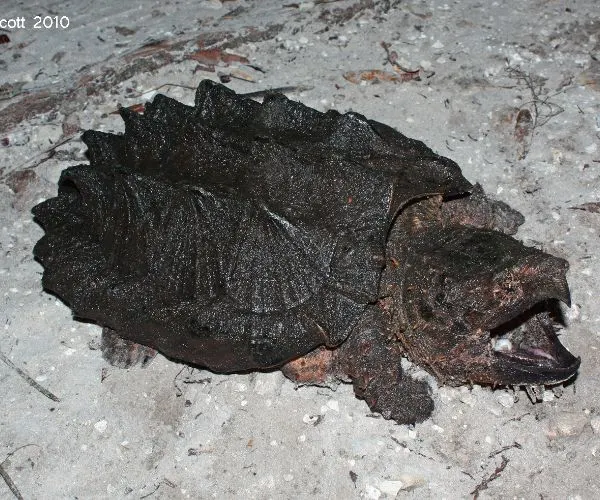
Suwannee snapping turtle is the newest addition to the snapping turtle family, scientifically speaking. This turtle was formerly lumped with the alligator snapping turtle, but a 2014 genetic study revealed that the population in the Suwannee River is distinct enough to be its own species.
Macrochelys suwanniensis is found exclusively in the blackwater Suwannee River and its tributaries in northern Florida and a small portion of southern Georgia. Because of its limited range, it’s sometimes called the Suwannee alligator snapping turtle. In appearance, it is very similar to M. temminckii (the “regular” alligator snapper). It has the tri-row spiked shell, large head, and worm-like tongue lure. Only subtle physical differences (like certain skeletal features and genetics) set it apart.
The Suwannee River is a unique habitat. It’s a dark, tannin-stained river winding over 240 miles from the Okefenokee Swamp to the Gulf of Mexico. M. suwanniensis lives in the river’s main channels, as well as some springs, oxbow lakes, and swampy backwaters connected to it. Unlike its widespread cousin, this turtle does not occur in any other river system.
That makes the species especially vulnerable to localized threats. Population surveys estimate that only around 1,000 to 2,000 adult Suwannee snapping turtles remain in the wild. They have a low reproductive rate (females may not nest every year), and losing just a few breeding-aged turtles can significantly impact the small population.
Biologically, the Suwannee snapper’s lifestyle mirrors that of the alligator snapper. It is primarily nocturnal and crepuscular (active at night and twilight), spending daylight hours resting on river bottoms or under structure. It feeds on fish, crayfish, mollusks, amphibians, and any carrion it finds. It likely also uses a tongue lure to catch prey, although studies specific to this species are limited. One interesting note: in 2021, a Suwannee snapping turtle was spotted in the Okefenokee Swamp (Georgia), suggesting there might be some turtles in feeder streams of the swamp (or it traveled downstream from the swamp, since the swamp is the Suwannee River’s headwaters).
Conservation Status: Because the Suwannee snapping turtle was only recently described, it hasn’t yet been individually assessed by the IUCN Red List. However, its status is clearly of concern. NatureServe, which evaluates conservation status, ranks it G2 (Globally Imperiled), reflecting its single, small area of occurrence. In 2024, the U.S. Fish and Wildlife Service listed the Suwannee alligator snapping turtle as a Threatened species under the Endangered Species Act.
This federal protection came with a special rule to help conserve the species (for example, regulating certain activities like fishing practices that often snag these turtles). Even before the federal listing, Florida and Georgia had already classified it as a state Threatened species and made it illegal to capture or kill.
The main threats to M. suwanniensis are human-related. Illegal harvesting was a problem in the past (people catching them for meat or to sell), and even occasional poaching can be devastating to a limited population. Incidental capture in fish traps or on trot-lines is another issue. Turtles often drown when they get caught in those, if they unable to surface for air.
Additionally, nest predation by animals like raccoons might be higher in some areas due to human presence (e.g., raccoons being more common around campgrounds or boat ramps). The Suwannee River itself is relatively less impacted by dams (it has no major dams along its course), but any future habitat alterations or pollution events (like chemical spills) could have outsized effects on this turtle since it cannot simply move to a new river.


- Threats: Extremely limited range (confined to one river system) makes it vulnerable. Illegal harvesting and poaching significantly reduced numbers historically. Bycatch in recreational fishing (hooks, trotlines, nets) can injure or drown turtles. Predation on eggs by raccoons, armadillos, and feral hogs is a concern. Any water pollution or habitat changes in the Suwannee River (such as excessive water withdrawal or development along the river) could impact food availability and nesting sites.
- Conservation: Listed as Threatened under the U.S. Endangered Species Act (as of 2024). Fully protected from take in Florida and Georgia. Conservation agencies are monitoring populations through surveys. The entire known habitat lies within wildlife refuges, state parks, and protected areas like the Lower Suwannee National Wildlife Refuge and several state parks along the Suwannee. These protections help, but enforcing fishing regulations (e.g., using turtle-exclusion devices in nets) and preventing poaching are ongoing needs. Public education in the region highlights the importance of this unique turtle and encourages anglers to report accidental catches rather than harm the turtles.
The discovery of the Suwannee snapping turtle as a distinct species highlights how there is still more to learn about wildlife, even large animals, in our backyards. Preserving the wild, dark waters of the Suwannee River will be essential to keeping this rare turtle around. With concerted effort, conservationists are hopeful that M. suwanniensis can recover and continue to lurk in the depths of its ancient river home.
Central American Snapping Turtle (Chelydra rossignonii)

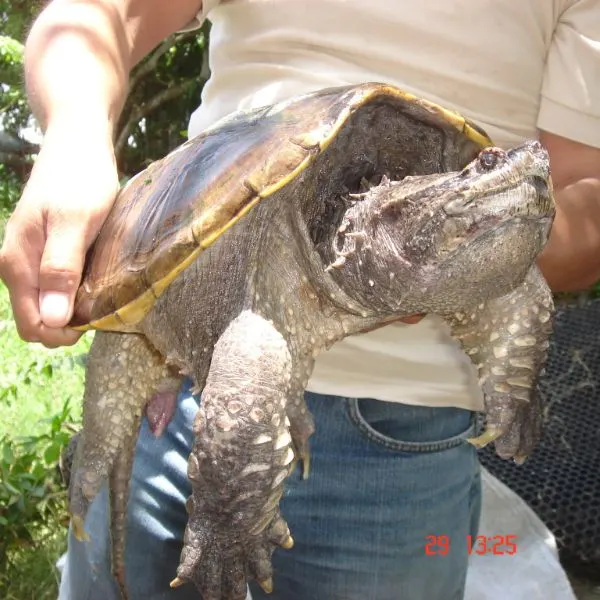
The Central American snapping turtle is a close relative of the common snapping turtle, found further south in the tropical parts of North and Central America.
Other common names include the Mexican snapping turtle and Yucatán snapping turtle. Chelydra rossignonii inhabits the Atlantic (Caribbean) drainage systems of southeastern Mexico (including the Yucatán Peninsula), Belize, Guatemala, and possibly Honduras. It was once considered just a southern subspecies of Chelydra serpentina, but it’s now recognized as its own species.
Central American snappers have a lot in common with the common snapper. They have a rugged shell, usually dark brown, gray, or black, with a serrated rear edge. The plastron is small and cross-shaped, often pale yellow, gray, or cream in color.
Their skin is typically dark with lighter speckles, and juveniles may have noticeable white speckling or mottling. In size, C. rossignonii is medium-large: adult shell lengths reach around 35-40 cm (14-16 in). One weighed female was recorded at 12 kg (~26 lb). Males likely get larger than females, as with other snappers. They have strong jaws and a similar disposition to common snappers.
This species lives in warm lowland aquatic habitats. They favor slow-moving rivers, sloughs, swamps, and oxbow lakes with muddy bottoms and lots of vegetation. Unlike some common snappers that can tolerate brackish water, the Central American snapping turtle sticks to freshwater.
They also generally avoid clear, fast-flowing streams, preferring turbid and heavily vegetated waters where they can hide easily. These turtles seldom bask in the sun; they might occasionally surface near fallen logs to warm up, but they tend to remain in the water or in shaded muddy shallows.
The diet of Chelydra rossignonii is omnivorous. In the wild, they feed on aquatic invertebrates (insects, snails, crayfish, crabs, shrimps), fish, frogs, and small vertebrates they can catch. They will scavenge carrion when available. They also consume plant matter such as aquatic weeds, fallen fruit, and algae.
Essentially, like their northern cousins, they eat a bit of everything. Farmers in parts of Tabasco (Mexico) have reported snapping turtles taking small ducklings or tilapia from ponds, indicating their opportunistic feeding. In turn, young snapping turtles fall prey to wading birds and larger fish in these ecosystems.
Little specific information is published about the breeding of this species in the wild, but observations from captivity and local knowledge suggest a similar reproduction pattern: mating likely occurs in the early rainy season (spring), and nesting from late spring into summer (April to June in Chiapas, Mexico).
Wild females probably lay around 20-30 eggs in a clutch, burying them on land near water. Given the warm tropical climate, incubation might be shorter (~75-85 days) compared to more temperate snapping turtles, but exact data are scarce. Hatchlings would emerge during the wet season when water levels are high and food is plentiful.


Conservation Status: The Central American snapping turtle is listed as Vulnerable on the IUCN Red List. Throughout its range, it faces pressures from hunting and habitat degradation. In many rural communities, turtles (including this species) are traditionally harvested for food. The meat is consumed locally or sold in markets.
he shell and other parts may be used in folk medicine. Habitat loss is another big issue: wetland draining, pollution from agriculture, and deforestation of riverbanks all harm water quality and turtle nesting areas. Unfortunately, enforcement of wildlife protection laws in parts of Mexico and Guatemala is limited, so even where the species is legally protected on paper, poaching may continue.
On a brighter note, there are ongoing efforts to help C. rossignonii. In Tabasco, Mexico, a conservation breeding program has been established to breed this turtle in captivity. Local breeders also raise hatchlings for the pet trade, which, if done sustainably, could reduce collection pressure on wild populations. Several national parks and reserves in southern Mexico, Belize, and Guatemala encompass suitable habitat for the Central American snapper, potentially providing safe havens if enforcement is adequate. Raising public awareness in the region about the turtle’s vulnerable status is key, as is providing alternative protein sources so that communities aren’t as reliant on hunting wildlife.
Threats: Overharvesting for food is the number one threat. These turtles are often collected whenever encountered, and their populations can’t sustain heavy hunting. Habitat destruction is also significant. This is due to conversion of swamps to farmland, pollution from pesticides and fertilizers, and loss of riverine forest cover all degrade the turtle’s environment. Additionally, this species has a relatively restricted range (Yucatán and adjacent areas), so it’s inherently at risk if those areas are not conserved.
Conservation: IUCN Status: Vulnerable. Some range countries list the species under protected status (for example, it’s protected in Mexico and Guatemala), but enforcement needs improvement. Conservation breeding and head-starting programs in Mexico are trying to bolster numbers. Maintaining healthy wetlands in places like the Sian Ka’an Biosphere Reserve (Mexico) and Maya Biosphere Reserve (Guatemala) will benefit this turtle. International trade in this species is monitored under CITES (as part of the snapping turtle group listing), but most trade is local. Ecotourism focused on freshwater wildlife in Central America might also promote the value of live turtles over harvested ones.
The Central American snapping turtle is a reminder that snapping turtles aren’t just an American Midwest icon, they also lurk in the tropical waters further south. Ensuring that these ancient reptiles continue to thrive in the rivers and lagoons of Central America will require a combination of local conservation actions and broader habitat protection initiatives.
South American Snapping Turtle (Chelydra acutirostris)


The South American snapping turtle is the southernmost member of the snapping turtle family. Its scientific name, Chelydra acutirostris, literally means “sharp-snouted turtle” (referring to a somewhat more pointed nose). This species was historically considered a subspecies of the common snapper, but like C. rossignonii, it has been elevated to full species status.
The range of C. acutirostris includes parts of Central America (eastern Honduras, Nicaragua, Costa Rica, Panama) and extends into northern South America (primarily Colombia and a small part of Ecuador). It’s notable because it represents the expansion of snapping turtles into South America after the Isthmus of Panama land bridge formed a few million years ago.
In appearance, the South American snapper looks very much like a common snapping turtle. It has a dark, rugged carapace that can be brown, gray, or black, with a serrated back margin. The plastron is reduced and cross-shaped. One distinguishing feature often noted is the relatively pointed snout (hence the name acutirostris), but this is a subtle difference.
Juveniles may have rougher shells with small spikes, which smooth out somewhat as they age. Size-wise, they are in the same ballpark as the Central American snapping turtle: shells roughly 30-40 cm (12-16 in) long, weights generally 5-15 kg (11-33 lb) for adults, with occasional larger specimens. Males tend to be bigger than females.
C. acutirostris inhabits freshwater ecosystems such as rivers, marshes, and ponds on the Caribbean slope of its range countries. In South America, it’s mainly found in Colombia’s Pacific coastal drainages and in the Magdalena River basin. Like its relatives, it prefers slow or still waters with plenty of cover. It is a predominantly aquatic turtle and rarely leaves the water except to nest.
There’s not much documentation of its specific behaviors, but it is assumed to have habits similar to the common snapper which is an ambush hunter that also scavenges, and is potentially more active at night. Locals in parts of Colombia refer to it as “tortuga lagarto” (which translates to “alligator turtle” or “lizard turtle”), indicating its fierce appearance.
The diet of the South American snapping turtle likely mirrors that of other snapping turtles: fish, frogs, freshwater crabs and snails, insects, and any small animals it can catch. It will also eat plant material and carrion opportunistically. Given the biodiversity of tropical waters, there’s a wide buffet available. There have been anecdotes of these turtles taking advantage of fish caught in nets or traps, essentially stealing an easy meal, which sometimes leads fishermen to kill them as pests.
Conservation Status: The South American snapping turtle has not been separately evaluated by the IUCN in recent years; earlier it was lumped under C. serpentina which was Least Concern. However, in parts of its range, it is likely under pressure. Habitat loss in Central American wetlands and Colombian rivers (due to agriculture and development) can affect populations.
Moreover, these turtles are sometimes harvested by local communities for consumption. In countries like Colombia and Costa Rica, there are wildlife protection laws, but enforcement in remote wetland areas can be spotty. On the positive side, some of its range overlaps with protected areas (for instance, Tortuguero region in Costa Rica, and national parks in Colombia’s Chocó region), which provide some refuge.
Because C. acutirostris inhabits a fairly large geographic area (from Honduras to Ecuador), its overall population might be more secure than the very restricted Central American and Suwannee species. Still, no snapping turtle does well under heavy exploitation. It would be benefitial to have more research attention so that scientists can understand its ecology and population status better. There may even be distinct sub-populations that warrant conservation focus.
Threats: Habitat destruction (draining of swamps for agriculture, deforestation leading to siltation of rivers) is a concern. Overhunting in some locales for meat can impact numbers. Pollution from gold mining (in parts of Central America and Colombia) and pesticides can degrade water quality. Also, being caught accidentally in fishing gear can lead to drowning if turtles can’t surface.
Conservation: IUCN Status: Not formally assessed as a separate species (was once part of common snapping turtle listing). Some range countries include it under general wildlife protection laws. It’s presumably included in CITES Appendix III (through the listing of snapping turtles by the US), meaning international trade requires permits.
Protecting large wetland reserves and educating local communities about sustainable practices will help. Because this species is not as well-known, one priority is to gather more data on its distribution and abundance. It may very well qualify for a threatened category if detailed surveys were done.
In summary, the South American snapping turtle represents the far reach of snapping turtles into the Neotropics. While less is known about it compared to its northern cousins, it shares the formidable traits of the family. Ensuring that jungle rivers and marshes remain healthy and connected is key to the survival of this often-overlooked snapping turtle at the southern end of its clan’s range.
Frequently Asked Questions
Are snapping turtles good pets?
Snapping turtles can be intriguing pets for experienced reptile keepers, but they are not recommended for beginners. Many people find them excellent “pet dinosaurs” due to their appearance. However, keep in mind that even a small snapping turtle can deliver a very painful bite.
They also grow from a tiny hatchling (with a shell the size of a quarter) to a large, heavy turtle that needs a lot of space. The alligator snapping turtle, for example, has been called the “best pet monster” by some enthusiasts because of its impressive look, but that comes with significant responsibility.
If raised from young, snapping turtles can become accustomed to their owners and some learn to take food from tweezers or by hand (caution advised). They are generally not handleable pets, in other words, they are more for observation in a well-designed enclosure. Some keepers say common snappers can become relatively docile toward people they know, but each turtle has its own temperament. Overall, they are fascinating but challenging captives.
For someone determined to keep a snapping turtle, be prepared for the commitment. They live a long time (potentially decades, outliving you in some cases), and they require a diet of protein-rich foods. They also produce a lot of waste in the water, meaning a strong filtration system is necessary to maintain water quality. As they age, they might become less active (alligator snappers, for example, often just sit and wait for food), but they still need ample space. In summary, snapping turtles can be “good” pets for specialized keepers who provide the right care, but they are not cuddly or low-maintenance animals by any stretch.
Can you legally keep snapping turtles as pets?
Laws about keeping snapping turtles vary widely depending on where you live. In some places, it’s completely legal to own a snapping turtle; in others, it’s restricted or prohibited. For instance, in Canada the common snapping turtle is a protected species. It’s illegal to capture or keep them as pets there. In the United States, regulations differ by state.
Some states allow keeping common snappers but with a permit or limits (especially if collecting from the wild). Alligator snapping turtles are protected in many states due to their Vulnerable status; in states like Florida and Texas, you generally cannot take one from the wild. Some states outright ban private ownership of alligator snappers.
Internationally, the trade of snapping turtles is monitored. For example, exporting or importing alligator snapping turtles requires CITES permits now. Many countries consider them invasive species or dangerous pets and have restrictions. Before getting any snapping turtle, you absolutely must check your local wildlife laws and regulations.
Often pet stores do not sell snapping turtles (except perhaps the common snapper in places where legal). Specialized reptile breeders may have captive-bred babies available. Always ensure you have documentation and are following the law if you acquire one.
Beyond legality, also consider that larger snapping turtles can be difficult to re-home. Animal shelters typically don’t accept reptiles, and wildlife rehabilitators can’t take exotic pets. Sadly, many pet snapping turtles get released illegally when they become too much to handle, which can harm local ecosystems. So responsible ownership includes planning for the turtle’s potentially large adult size and long life.
Are snapping turtles easy to keep?
Snapping turtles are hardy and fairly forgiving in terms of diet and water conditions, but “easy to keep” is relative. If you compare a snapping turtle to, say, a small tortoise or a pet lizard, the snapper is more challenging due to its size and potential aggression. Here are some considerations:
Housing: Snapping turtles need a large enclosure, especially as adults. A common snapper will require at least a 100-150 gallon tank (around 380-570 liters) or a small pond. Alligator snappers, being even larger, often need custom-built indoor ponds or large outdoor ponds in warm climates. The enclosure must have land areas if kept indoors (for basking or if the turtle wants to leave the water) and very sturdy barriers (strong sides and a secure top if indoors, fencing if outdoors) because these turtles are powerful and good at escaping.
Equipment: You’ll need a high-capacity water filter, as snapping turtles are messy eaters and produce a lot of waste. Regular water changes are a must to keep ammonia and bacteria in check. Water heaters might be necessary to maintain temperatures if your room is not warm (ideal water temps are generally in the mid 70s °F, ~24 °C, for common snappers; alligator snappers prefer slightly cooler). A basking area with a heat lamp can be provided, though many snappers don’t bask often.
Diet: Feeding a snapping turtle is straightforward but can be costly as they grow. They eat a variety of foods: you can feed high-quality commercial turtle pellets, earthworms, insects, fish (fresh or frozen/thawed), shrimp, chicken or turkey pieces occasionally, and leafy greens or vegetables (some will nibble plants). They are not picky eaters, which is a plus, but they eat a lot as they get big.
Handling and safety: This is where they are not easy. Snapping turtles generally do not like being handled. A small juvenile might tolerate occasional handling, but as they get larger, it becomes dangerous to pick them up. Most keepers use nets or thick gloves if moving is required. Maintenance of the tank/pond must be done carefully (for example, distract the turtle with food on one side while you clean the other, or temporarily partition the tank). You have to respect the bite, it’s not as lethal as some myths suggest (they can’t bite off a hand), but it can cause severe injury.
Given those factors, snapping turtles are moderately difficult to keep. They are hardy in the sense that they won’t easily fall ill if water quality slips a bit or if their diet isn’t perfect. But the logistical challenges of space, equipment, and safety mean they are best suited for experienced reptile enthusiasts. If you set up a proper habitat and adhere to a cleaning schedule, keeping a snapping turtle can be quite manageable. They don’t need daily walks or social interaction, after all. It’s the initial setup and long-term scale that make it a serious project.
Are snapping turtles endangered?
As a group, snapping turtles are not globally endangered, but some species are in trouble. None of the five species is currently listed as “Endangered” on the IUCN Red List globally. However, two species are listed as Vulnerable (one step below Endangered): the alligator snapping turtle (Macrochelys temminckii) and the Central American snapping turtle (Chelydra rossignonii). This means they are at high risk of endangerment in the wild.
The common snapping turtle (Chelydra serpentina) is classified as Least Concern internationally, which indicates it’s not at immediate risk of extinction and is still relatively abundant. However, even common snappers face pressures in parts of their range and are protected in some areas (for example, it’s a species of concern in several Canadian provinces). The South American snapping turtle (Chelydra acutirostris) has not been fully assessed on its own, but it may be doing okay in some regions and declining in others.
On a local level, some snapping turtles are considered endangered. For instance, as mentioned above, the Suwannee snapping turtle is now listed as Threatened under the U.S. Endangered Species Act due to its small population and restricted range. The alligator snapping turtle is considered endangered or protected at the state level in several U.S. states (like Illinois, Indiana, Missouri, and Kentucky). This state-level “endangered” status reflects that in those states, the species has declined greatly or is at risk. Additionally, the alligator snapper has been proposed for federal Threatened status in the U.S. (which may soon afford it nationwide protection).
In summary, while snapping turtles as a whole aren’t globally endangered, there is cause for concern. Conservation measures are important to ensure these ancient reptiles remain part of our natural heritage. Habitat protection, regulating harvest, and cracking down on illegal trade are all key steps to prevent any snapping turtle species from slipping into endangered status.
Conclusion
Snapping turtles are among the most captivating reptiles, combining an almost prehistoric appearance with fascinating behaviors. We’ve explored five species that span from the wetlands of Canada and the United States to the tropical rivers of Central and South America. Despite their rough-and-tumble image, these turtles play vital roles in their ecosystems as top predators and scavengers, helping control populations of other animals and cleaning up carrion from waterways.
It’s important to remember that while snapping turtles can be defensive and are best admired from a respectful distance, they do not attack humans unprovoked. In the wild they mostly just want to be left alone. If you encounter one, give it space, especially on land. In the water, you’re unlikely to even know a big snapper is nearby, as they tend to hide and avoid confrontation.
Conservation of snapping turtles is increasingly necessary. The larger species, like the alligator snapping turtle, have suffered from decades of overharvesting and now require protection to recover. Smaller-range species like the Suwannee, Central American, and South American snappers remind us how a limited distribution can make a species vulnerable to extinction. By safeguarding wetlands, enforcing sustainable practices, and educating the public (and pet owners), we can ensure that these feisty, incredible turtles remain a part of our world.
From the common snapper lurking in a local pond to the giant alligator snapper ambushing fish in a cypress swamp, snapping turtles inspire both caution and admiration. With responsible stewardship, humans and snapping turtles can continue to share the planet and our future generations can marvel at these living dinosaurs as we do today.
Sources
- IUCN Red List – Alligator Snapping Turtle (2018 Assessment)
- IUCN Red List – Common Snapping Turtle (2019 Assessment)
- IUCN Red List – Central American Snapping Turtle (2019 Assessment)
- U.S. Fish & Wildlife Service – Suwannee Alligator Snapping Turtle Listed as Threatened (2024)
- NatureServe Explorer – Alligator Snapping Turtle Status
Cherie Everett
Tuesday 10th of September 2019
Do snapping turtles feed on fish in my farm pond?
rick osten
Saturday 24th of August 2019
there great animals and make good pets but can be messy when real big. they always look like something you want to show off to friends cause theres nothing more interesting.
Daniel
Sunday 30th of June 2019
I found a turtle but a don’t now if it’s a snapping turtle
Molly Kaye
Saturday 31st of August 2019
When I was a little girl, I had a pet turtle for awhile that we caught from a creek on our farm. I let it go after awhile because we felt it was better off in the wild. I got to observe and still have a fondness for turtles. I was walking close to a pond on our land when I saw a fairly big turtle and picked it up toward the back of it's shell. It hissed and a Very long neck shot a beak toward my hand. I had picked up a snapping turtle. I dropped it, it crawled away after awhile and I became much more careful about identifying what I was handling. I think if you have a snapping turtle and handle it, it will be obvious. Just be careful as they will sincerely try to bite and a large snapper can take off a finger.
AllTurtles
Monday 1st of July 2019
There is either the common snapping turtle or alligator snapping turtle, have a look at our turtle species page and compare them. If you are still unsure send us an email at info@allturtles.com with a few pics and we will try to help.